How Oregon Is Your Oregon Whiskey?

Oregon’s whiskey scene is real and growing, and buying local is one of the best reasons to use the new 🌲 Oregon Made filter. But “Oregon whiskey” covers more than one way of making whiskey, and knowing the difference makes you a better shopper. Not a more suspicious one — a better one.
Some Oregon producers distill from grain to glass in-state. Others start with spirit distilled elsewhere and do their work — blending, finishing, proofing, aging — here. Both are legitimate. Both show up in great bottles. They’re just different crafts, and each is worth appreciating for what it is.
Data from publicly available OLCC inventory, updated every morning. LiquorMapper is not affiliated with the Oregon Liquor and Cannabis Commission.
Why sourcing exists, and why it isn’t a dirty word
Whiskey has a timeline problem. A new distillery might wait three to five years before its own spirit is ready to sell, longer for anything seriously aged, and the rent is due the whole time. So many young distilleries buy mature whiskey from large producers — MGP in Indiana famously supplies hundreds of brands — and blend, finish, or bottle it under their own label while their own barrels sleep.
This is how a lot of beloved American whiskey gets made, well beyond Oregon. And the work involved is real. Selecting barrels is a skill. Blending is a craft with centuries of tradition behind it in Scotland and Ireland. Finishing sourced whiskey in an unusual cask — a local wine barrel, a stout barrel from the brewery down the street — can produce something that exists nowhere else. Scotland’s most famous names include blending houses, and nobody calls that cheating.
So the question isn’t “sourced or not.” It’s “what did this producer actually do, and is the bottle good?” Oregon happens to have strong answers on both sides.
The grain-to-glass producers
These distilleries make whiskey from scratch in Oregon.
Westward. Westward is Portland’s flagship American single malt house: Oregon-grown barley, fermented with ale yeast, pot-distilled, aged in new American oak. The beer heritage is audible in the glass — malty, a little fruity, not trying to be bourbon or scotch. The Stout Cask and Pinot Noir Cask finishes lean into local barrels, which is about as Oregon as a whiskey can get.
Clear Creek. Stephen McCarthy started distilling in Portland in 1985, and McCarthy’s Oregon Single Malt — peated, aged in Oregon oak — is one of the earliest American single malts and still one of the most distinctive.
Ransom. In Sheridan, Ransom does idiosyncratic, historically minded whiskey: malted barley and unmalted rye, French oak, recipes that look backward on purpose.
Rogue. The Newport brewery grows its own barley on Rogue Farms and turns Dead Guy Ale’s grain bill into Dead Guy Whiskey, field to bottle.
Oregon Spirit Distillers, Bull Run, and others round out a bench that gets deeper every year. Bend and Portland in particular keep producing them.
The Oregon blenders and finishers
Other Oregon brands start with spirit distilled out of state and add their value here: selecting, blending, finishing, proofing with Oregon water, building a brand with Oregon identity. Some are fully transparent about it on the label; industry-wide, some are vaguer, and transparency is a fair thing to reward with your dollars.
The point isn’t to sort these brands into a lesser tier. Several of Oregon’s most popular whiskeys work this way, and they’re popular because they taste good and cost fair money. If a Burnside or Trail’s End bottle is the one you reach for, that’s an Oregon company employing Oregonians and putting out whiskey people like. That counts.
If grain-to-glass matters to you specifically — you want the barley grown here, the stills here, the whole chain — the producers in the previous section are your list, and labels that say “distilled in Oregon” or “estate” are your tell. “Produced by” or “bottled by” usually indicates sourced spirit. When a label is ambiguous, distillery websites are usually straightforward about it, and asking at a tasting room gets you an honest answer nearly every time.
Using the filter with this in mind
The 🌲 Oregon Made toggle on LiquorMapper covers both kinds of producer — about 460 products from 43 Oregon brands and distilleries, from the strictest grain-to-glass operations to Oregon companies finishing and bottling here. Where the spirit in a specific bottle was distilled is the producer’s story to tell, and the good ones tell it.
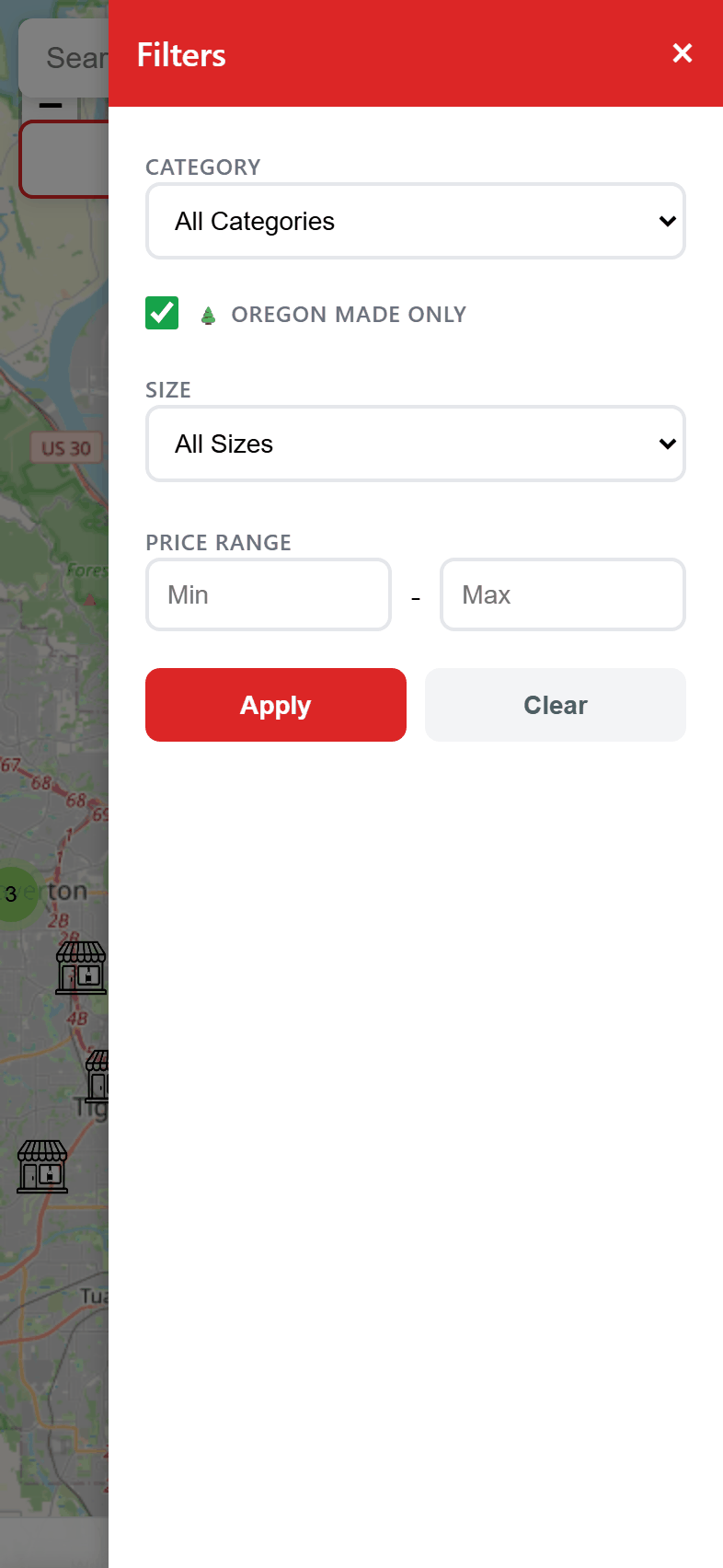
Combine it with the Whiskey category and a ZIP code and you have the state’s Oregon whiskey shelf in front of you: what exists, who carries it, and what it costs, refreshed every morning.
FAQ
Is all Oregon whiskey distilled in Oregon?
No, and that’s normal industry-wide. Some Oregon producers distill grain to glass in-state; others source spirit from large distilleries elsewhere and blend, finish, or bottle it in Oregon. Both approaches produce good whiskey.
How can I tell if a whiskey was distilled in Oregon?
Look for “distilled in Oregon” or similar on the label. “Produced by” or “bottled by” usually signals sourced spirit. Producers’ websites and tasting rooms are generally forthcoming if you ask.
What is American single malt?
Whiskey made from 100% malted barley at a single US distillery — scotch’s grain bill with American techniques and oak. Oregon, led by Westward and McCarthy’s, helped pioneer the style.
Which Oregon distilleries are grain to glass?
Westward, Clear Creek (McCarthy’s), Ransom, Rogue, Oregon Spirit Distillers, and Bull Run are among the producers distilling in-state, with more each year.
Filter to Oregon-made bottles at LiquorMapper, or read the Oregon Made filter guide. Inventory updates daily from OLCC public data.